
Construction Site Security Solutions in Dallas and DFW
- Jul 17
- 8 min read
Texas leads every other state in construction equipment theft, accounting for approximately 24% of all reported incidents nationwide. For contractors and developers working across the Dallas-Fort Worth Metroplex, where construction activity consistently ranks among the most active in the country, that statistic is not background noise. It is an operational risk that shows up in insurance claims, project delays, and profit margin erosion on every active site that lacks proper security coverage.

According to industry data on construction equipment theft, more than 11,000 pieces of construction equipment are reported stolen annually in the United States, with financial losses estimated at $400 million or more per year in equipment theft alone. The recovery rate for stolen construction equipment sits below 25%, meaning the vast majority of assets taken from unprotected DFW job sites are never returned.
For Plano and DFW contractors, the security calculus is straightforward: the cost of a well-designed construction site security system is a fraction of the cost of a single major theft event, and far less than the project delays, insurance premium increases, and rescheduled subcontractors that follow it.
Key Takeaways
Texas accounts for roughly 24% of all construction equipment theft nationally, more than any other state
Recovery rates for stolen construction equipment are below 25%, making prevention the only reliable strategy
After-hours and holiday periods represent the highest-risk windows for DFW construction sites
Temporary surveillance cameras, remote monitoring, and controlled site access are the three most effective deterrents for active job sites
Copper wire theft is a growing and disproportionate problem in DFW, with newly installed electrical work a primary target
Construction site security must be adaptable as the site evolves through phases, making mobile and repositionable systems essential
Table of Contents
Why DFW Construction Sites Are High-Value Targets
The Dallas-Fort Worth Metroplex is one of the most active construction markets in the United States. Commercial development continues at pace across Frisco, Plano, Allen, and the Legacy corridor, while residential construction in communities throughout Collin County maintains high volume year over year.
That activity creates a target-rich environment for organized theft operations. Construction sites share structural vulnerabilities that make them predictable targets:
Sites are unmanned for twelve or more hours every night
Perimeters are difficult to fully secure, particularly during early and mid-construction phases
High-value equipment and materials sit in plain view with minimal protection
Multiple subcontractor access points make it difficult to control who enters and exits
Theft concentrates during predictable windows including long weekends and holiday periods when sites are completely unattended
Active DFW job sites in Plano, Frisco, and the surrounding communities face all of these conditions simultaneously during peak construction seasons.
What Gets Stolen from DFW Job Sites
Understanding the target profile helps contractors prioritize protection. Construction site theft in DFW concentrates in the following categories.
Heavy Equipment
Excavators, skid steers, generators, compressors, and trailers are the highest-value targets. Organized theft crews arrive with low-bed trailers and can remove a piece of equipment in under 20 minutes without an on-site deterrent. The average theft incident involving heavy equipment results in approximately $30,000 in direct losses, not including project delays.
Copper Wire and Electrical Materials
Copper theft is a particularly serious and growing problem in DFW. Newly installed electrical wiring in unoccupied structures is systematically targeted, with theft crews stripping recently completed electrical work and forcing rework that extends project timelines. The cost of copper theft extends well beyond the material value when rework labor is included.
Tools and Small Equipment
Power tools, hand tools, compressors, and portable generators are high-frequency theft targets because they are easily transported and quickly resold. These thefts often occur during active hours when site access is less controlled, making visible camera coverage and credentialed access important even during working hours.
Building Materials
Lumber, framing materials, and HVAC components are targeted at residential construction sites, particularly in developing neighborhoods where multiple adjacent sites create a concentrated material supply with minimal after-hours oversight.
The True Cost of Construction Theft Beyond the Equipment
The sticker value of stolen equipment understates the actual cost to a DFW contractor significantly.
Cost Category | Description |
Direct replacement cost | The market value of the stolen equipment or materials |
Project delay costs | Labor standby, subcontractor rescheduling, contract penalty exposure |
Insurance premium impact | Claims history increases premiums on future coverage |
Replacement lead time | Specialized equipment may require weeks to source and deliver |
Administrative time | Insurance claims processing, police reports, internal documentation |
Rework costs | When installed materials like copper wiring are stripped and must be reinstalled |
For most DFW contractors, a single major theft event costs significantly more in total than the annualized cost of professional security coverage for the entire project duration. The math on construction site security is rarely close.
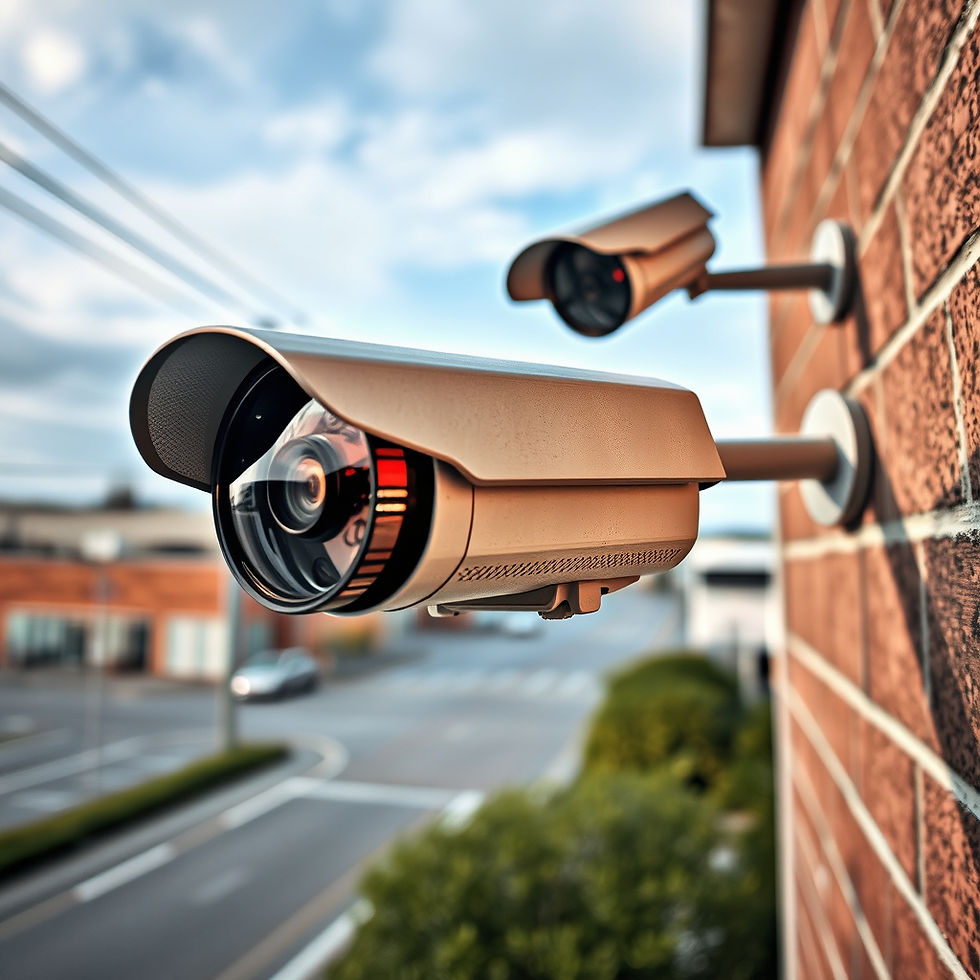
Temporary Surveillance Camera Solutions for Active Sites
Traditional fixed surveillance cameras are not well-suited to active construction environments. As the site progresses through phases, camera positions that covered the site perimeter in week three may be obstructed by completed structures in week ten. The security system needs to evolve with the site.
Commercial video surveillance solutions for DFW construction sites should include:
Mobile and repositionable camera units. Cameras mounted on trailers or temporary poles can be relocated as site conditions change. This adaptability is essential for maintaining effective coverage throughout the project lifecycle.
Solar and battery-powered options. Many construction sites lack permanent power infrastructure during early phases. Camera solutions that operate on solar or battery power eliminate the dependency on temporary power connections that may not be available or reliable.
High-resolution perimeter coverage. Cameras positioned to cover site entry points, equipment staging areas, and material storage zones provide the coverage priorities for most DFW job sites. Night vision capability is essential given that most theft occurs after dark.
Remote access for project managers. Cloud-connected camera systems allow project managers, general contractors, and site superintendents to monitor site conditions from any device, eliminating the need for physical presence to verify site security status.
Are you building in Plano, Frisco, or anywhere in Collin County? Contact SAS Security to discuss a construction site surveillance solution for your project. Call 972.312.1700.
Access Control for Construction Sites
Construction sites present a unique access control challenge because the authorized user population changes daily as different subcontractors and delivery crews rotate through the site. Traditional permanent access control systems are not practical for most construction environments.
Practical access control approaches for DFW construction sites include:
Temporary gate access systems. Controlled entry at primary site access points with credential verification for vehicles and personnel entering outside of normal working hours.
After-hours access logging. Any access to the site outside of defined working hours should be logged by credential and timestamp. After-hours access by unauthorized individuals is one of the most reliable leading indicators of an imminent theft event.
Visitor management at active sites. During working hours, a documented visitor log and mandatory check-in procedure for subcontractors and delivery personnel creates accountability for who is on-site at any given time.
Remote Monitoring for After-Hours Coverage
The most significant window for DFW construction site theft is the twelve or more hours per night when no authorized personnel are present. 24/7 remote video monitoring fills this window by placing trained operators actively watching your site during high-risk periods.
With remote monitoring, suspicious activity detected on camera can be addressed before a theft event occurs. A monitoring operator who observes an unauthorized vehicle approaching the equipment staging area can activate on-site audio to address the individuals directly, contact site management, and dispatch law enforcement with a verified, specific description of the situation.
This proactive capability is the critical difference between a camera system that records what happened after the fact and a monitoring system that stops it before it does.
Security Strategy by Construction Phase
Construction site security needs change as projects progress. The security system should be planned and adapted to match each phase.
Pre-construction and site preparation. Perimeter establishment, gate access control, and initial camera coverage of the staging area are the priorities. Equipment arrives early in this phase and is often unprotected.
Foundation and framing. Equipment value is highest during this phase. Camera coverage of equipment staging, generator positions, and material storage areas is the priority. Remote monitoring coverage during weekends and holidays should be in place.
Mechanical, electrical, and plumbing (MEP) phase. Copper wire theft risk is highest during and immediately after electrical rough-in. Camera coverage of the relevant building sections and controlled access to MEP work areas is essential.
Finishing and pre-occupancy. High-value fixtures, appliances, and finish materials become targets. Camera coverage should shift toward interior staging areas and the building entry points as permanent power and structured cabling become available.
Ongoing support. SAS Security provides fire and security inspections for Plano and DFW properties, including support for the transition from temporary construction security to permanent building security systems at project completion.
FAQs
Why is Texas the leading state for construction equipment theft?
Texas accounts for approximately 24% of all construction equipment theft nationally due to its combination of high construction volume, major highway access for organized theft operations, and the prevalence of large unmonitored job sites across the state.
What is the recovery rate for stolen construction equipment in Texas?
Industry data indicates recovery rates for stolen construction equipment are below 25%, meaning prevention is far more reliable than recovery. Once equipment leaves a DFW job site, it is often transported across state lines or stripped for parts within hours.
What types of cameras work best for active construction sites?
Mobile and repositionable camera units with solar or battery power options, high-resolution night vision capability, and cloud connectivity for remote access are best suited to active construction sites in Plano and DFW where site conditions change throughout the project.
When is the highest-risk period for DFW construction site theft?
After-hours periods, particularly overnight and during long weekends and holiday periods when sites are completely unattended, represent the highest-risk windows. Copper wire theft also occurs during active construction hours when MEP work is in progress.
Does SAS Security provide temporary security systems for construction sites?
Yes. SAS Security designs surveillance and monitoring solutions for construction projects in Plano and across the DFW Metroplex. Systems can be adapted as the project progresses through phases. Contact SAS Security at 972.312.1700 for a consultation.
How does remote monitoring help prevent construction theft?
Remote monitoring places trained operators actively watching your site during high-risk after-hours periods. Suspicious activity can be addressed in real time through on-site audio, management notification, and verified law enforcement dispatch before a theft event completes.
What is the cost of professional construction site security compared to theft losses?
The annualized cost of professional security coverage for most DFW construction projects is a fraction of the direct and indirect costs of a single major theft event. When project delay costs, insurance impact, and replacement lead times are included, the ROI on construction security is consistently positive.
Can access control work on an active construction site?
Yes. Temporary gate access systems, after-hours access logging, and visitor management procedures adapted for the rotating subcontractor and delivery crew populations on construction sites provide effective access control without the infrastructure requirements of permanent systems.
What happens to construction security when a project is complete?
At project completion, temporary construction security transitions to permanent building security. SAS Security supports this transition by designing systems that carry forward camera infrastructure, access control, and alarm monitoring into the permanent building security platform.
How do I get a security assessment for my DFW construction site?
Contact SAS Security at 972.312.1700 or visit sassecuritytx.com/contact. SAS Security serves construction projects across Plano, Frisco, McKinney, Allen, and the full DFW Metroplex.
References:
ECAM Technologies: Construction Equipment Theft Prevention

Comments